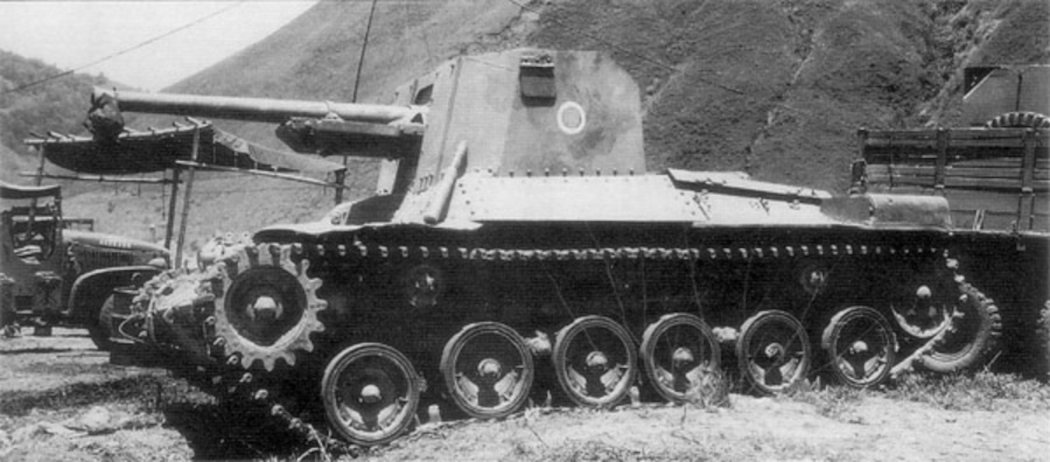

Roleself-propelled gun / tank destroyer family
Main weapon / system75 mm Type 90, 105 mm howitzer, or 75 mm Type 3 depending variant
Platform / layoutType 97 Chi-Ha chassis
MediaPrimary image integrated
Development and design
Ho-Ni I mounted a 75 mm field gun in an open superstructure, Ho-Ni II emphasized howitzer support, and Ho-Ni III moved toward a more enclosed antitank arrangement with the Type 3 75 mm gun. Production remained limited across all versions. 1, 2
Operational use
Ho-Ni vehicles saw little combat relative to European self-propelled guns; examples were committed in the Philippines late in the war while others remained in the home islands. 1, 2
Role and significance
The family is historically important less for scale than for showing how Japan attempted to extract heavier direct-fire capability from an existing medium-tank chassis under severe industrial constraints. 1, 2
Sources and further reading
Representative source set used for this profile. Primary image source and reuse terms are listed with the image.