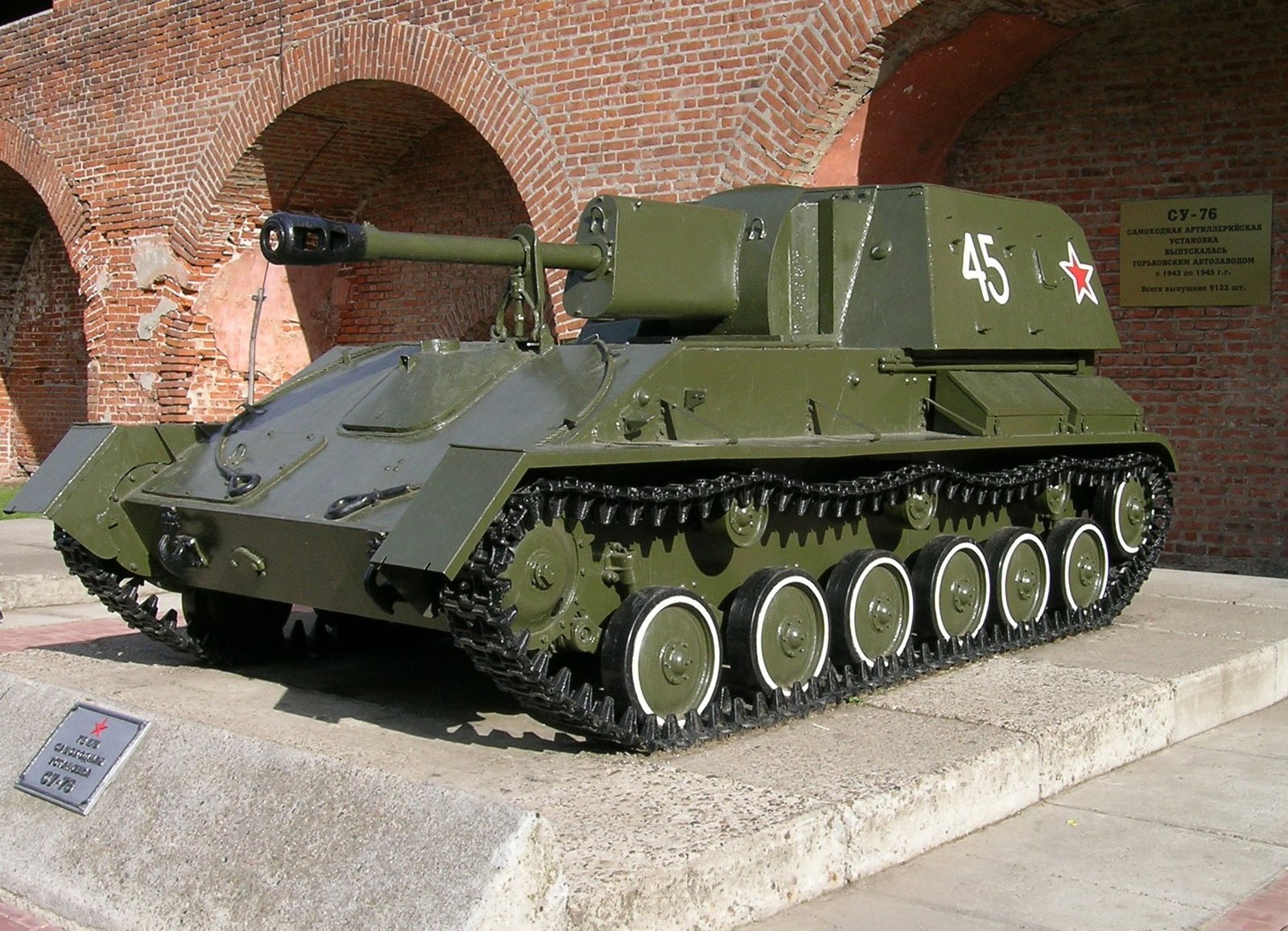

Development and design
Early twin-engine arrangements were troublesome, leading to the improved SU-76M with a revised drivetrain and open-topped fighting compartment. The result was simple, light, and easier to mass-produce than heavier Soviet assault guns. 1, 2
Operational use
SU-76Ms supported infantry, fired from direct and indirect positions, and engaged lighter armored targets. Their open tops and thin armor made them vulnerable, but their numbers and ability to bring a useful gun across difficult ground made them important in late-war Soviet operations. 1, 2
Role and significance
The family sits between artillery and tank-destroyer categories. In this archive it is grouped with direct-fire armored systems because battlefield employment frequently brought it forward with infantry and armor rather than limiting it to rear-area artillery work. 1, 2
Sources and further reading
Representative source set used for this profile. Primary image source and reuse terms are listed with the image.