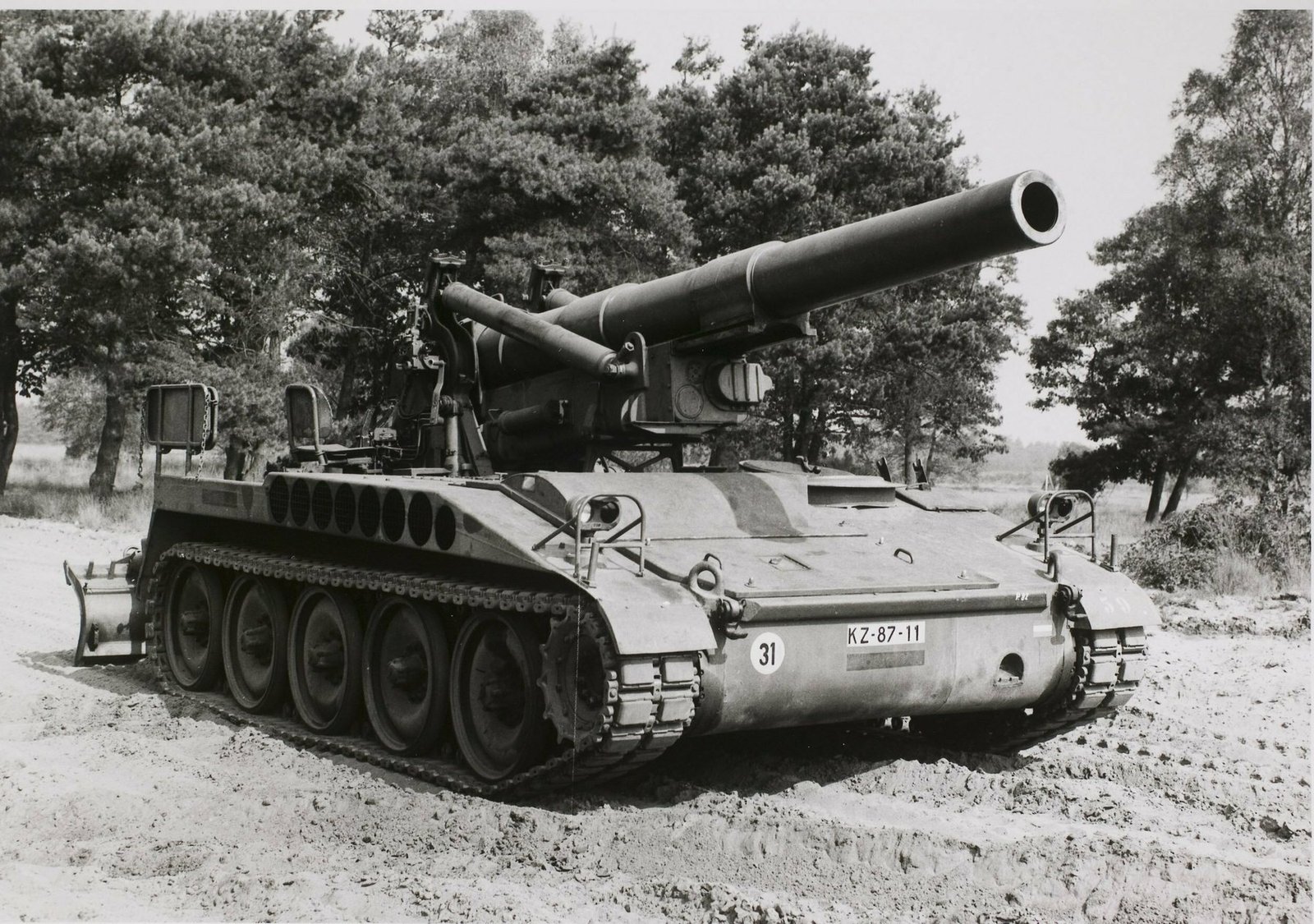

Rolelong-range heavy artillery
Main weapon / system175 mm gun (M107) / 203 mm howitzer (M110)
Platform / layoutcommon lightweight tracked artillery chassis with rear open weapon mount
MediaPrimary image integrated
Development and design
A common chassis supported the long 175 mm M107 gun and the shorter 203 mm M110 howitzer. Both used an open rear weapon installation and depended on support vehicles for much of the crew and ammunition. 1, 2
Operational use
The M107 became prominent in Vietnam for long-range fire, while successive M110 variants served for decades in U.S. and allied heavy-artillery units. Many M107 carriages were later converted to M110 configuration. 1, 2
Role and significance
The family emphasized strategic deployability and common automotive components over full crew enclosure, a different design path from the turreted M109 that became the standard divisional howitzer. 1, 2
Sources and further reading
Representative source set used for this profile. Primary image source and reuse terms are listed with the image.