
Development and requirement
Singapore initiated the next-generation AFV effort to replace ageing Ultra M113 vehicles. The Hunter was jointly developed by the Singapore Army, DSTA, and ST Engineering and was commissioned in 2019. 1
Design and battlefield role
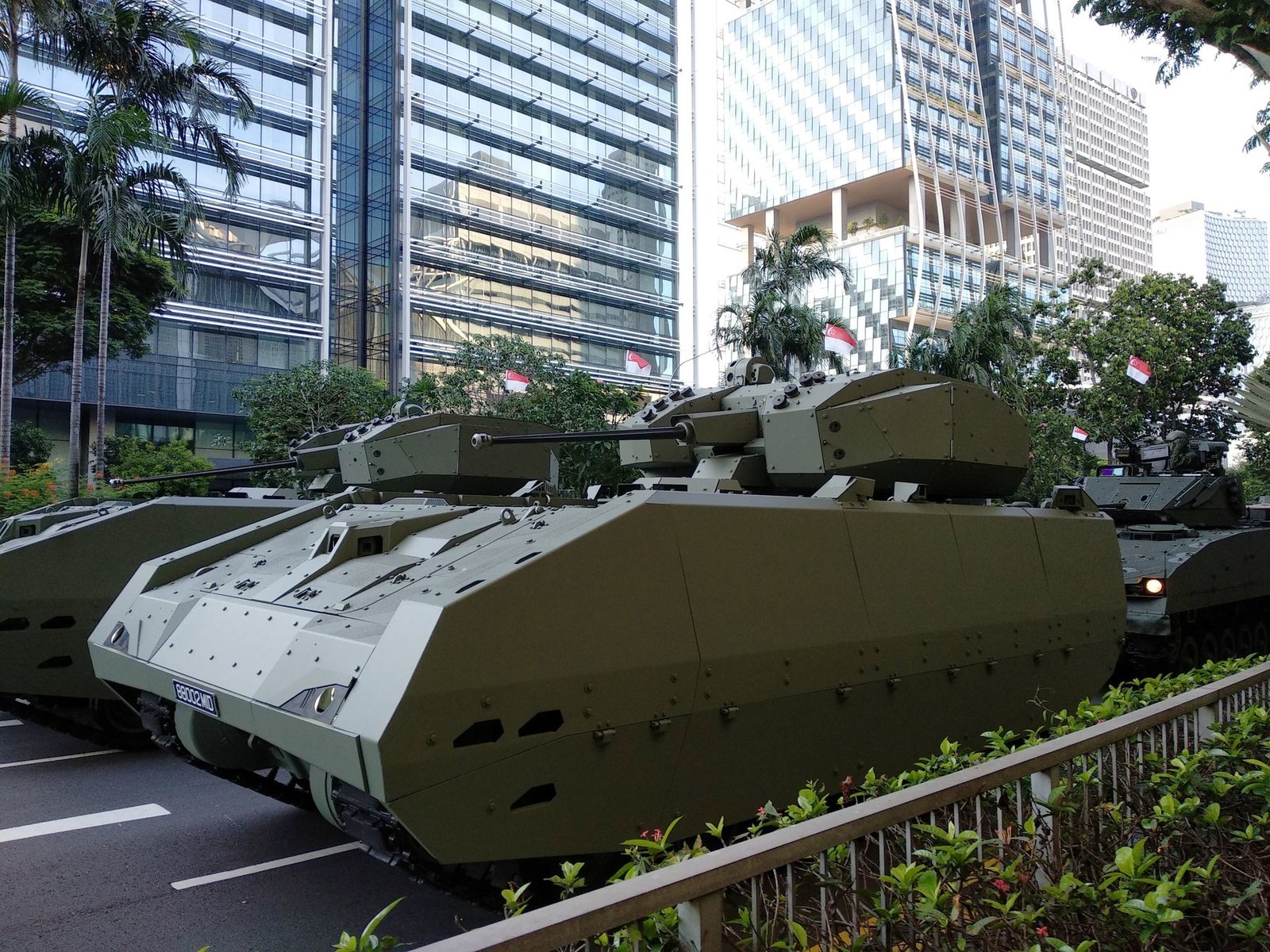
Hunter combines a 30 mm cannon, optional antitank missiles, all-round surveillance, digital mission systems, and drive-by-wire features. The design emphasizes closed-hatch operation and networked situational awareness. 1
Service and evolution
The platform is intended to serve as a core mechanized vehicle while supporting a wider Hunter-class family. Later engineer, recovery, and bridge variants illustrate how the chassis has become a broader armored platform ecosystem. 1
Archive boundaries
The troop-carrying cannon-armed Hunter is classified as an IFV. Support derivatives remain related through lineage but do not change the primary fighting vehicle’s taxonomy. 1
Sources and further reading
Representative source set used for this profile. Primary image source and reuse terms are listed with the image.